


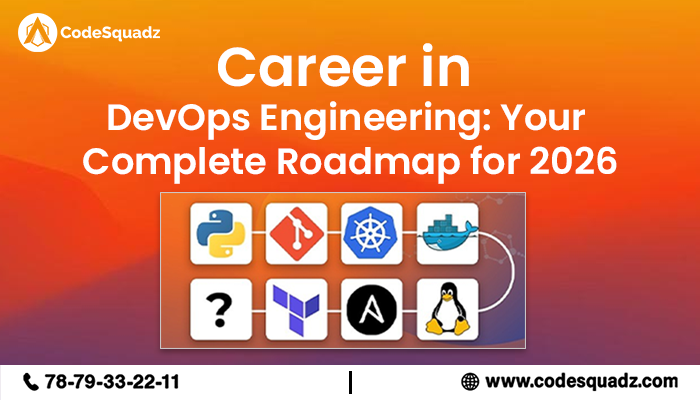
DevOps engineers are among the most sought-after professionals in tech right now, and the demand keeps growing, with the market forecast to reach $25.5 billion by 2028. Companies that once took months to release software updates now deploy multiple times per day—Amazon engineers deploy code every 11.7 seconds—and they need skilled people to make that happen.
This guide covers everything you need to know about building a DevOps career, from the core skills and step-by-step learning path to salary expectations and job roles you can pursue.
What is DevOps
A DevOps career focuses on bridging software development (Dev) and IT operations (Ops) by automating and streamlining the software lifecycle. DevOps emphasizes collaboration, CI/CD pipelines, cloud infrastructure, and continuous monitoring to deliver faster, more reliable software releases. It’s a high-demand field with roles like DevOps Engineer, Cloud Engineer, Platform Engineer, SRE, and DevSecOps.
DevOps is not a single tool or job title. It’s a cultural shift in how teams build and deploy software. Traditional workflows kept developers and operations teams in separate silos, which often caused delays and miscommunication. DevOps breaks down barriers by encouraging shared responsibility throughout the entire software delivery process.
The core principles that define DevOps include:
- Continuous Integration: Merging code changes frequently to detect issues early
- Continuous Delivery: Automating release processes so software can be deployed at any time
- Collaboration: Creating shared ownership between development and operations teams
Monitoring: Tracking system performance and user experience in real time
What is a DevOps Engineer
A DevOps engineer is an IT professional who implements DevOps practices within an organization. This role sits at the intersection of software development, system administration, and automation engineering.
Unlike traditional developers who focus primarily on writing application code, DevOps engineers concentrate on the infrastructure and processes that deliver code to users. They design systems that allow development teams to ship features quickly while maintaining stability and security.
What Does a DevOps Engineer Do
On a typical day, a DevOps engineer might configure a CI/CD pipeline in the morning, troubleshoot a production deployment issue after lunch, and review infrastructure costs before the day ends. The work varies based on the organization’s size and maturity.
Core responsibilities often include setting up automated testing environments, managing container orchestration platforms, and implementing monitoring solutions. DevOps engineers also spend time writing documentation and training other team members on new tools and processes. Collaboration is central to this role. You’ll work closely with software developers to understand deployment requirements, coordinate with security teams on compliance, and communicate with business stakeholders about system reliability.
Why Choose a DevOps Career
High Demand for DevOps Engineers
Companies across every industry—from fintech startups to healthcare enterprises—are actively hiring DevOps professionals. 37% of IT leaders report a lack of DevOps skills as their top technical skills gap, meaning qualified candidates often have multiple job offers to consider.
This demand stems from the business value DevOps delivers. Organizations that adopt DevOps practices can release software updates more frequently and respond to customer feedback faster.
Competitive Salaries and Growth Potential
DevOps roles consistently rank among the highest-paying positions in IT. Entry-level engineers can expect competitive starting packages, while experienced professionals with specialized skills command premium compensation.
The career trajectory offers clear advancement paths. You might progress from junior DevOps engineer to senior engineer, then to architect or engineering manager roles over time.
Continuous Learning Opportunities
The DevOps ecosystem evolves constantly, with new tools and practices emerging regularly. While this requires ongoing learning, it also keeps the work intellectually engaging and prevents stagnation.
Cross-Functional Collaboration
DevOps engineers interact with nearly every technical team in an organization. This exposure builds diverse skills and creates visibility that can accelerate career growth. You’ll develop both technical depth and communication abilities that distinguish senior professionals.
Skills Required for DevOps Engineers
Technical Skills
Building a strong foundation in the following areas prepares you for most DevOps roles:
- Linux/Unix administration: The majority of production systems run on Linux
- Scripting languages: Python and Bash are essential for automation tasks
- Version control: Git enables collaboration and tracks all code changes
- CI/CD tools: Jenkins, GitLab CI, and GitHub Actions automate build and deployment.
- Containerization: Docker packages applications, while Kubernetes orchestrates them at scale
- Cloud platforms: AWS, Azure, or Google Cloud host the most modern infrastructure
- Infrastructure as Code: Terraform and Ansible define infrastructure in a version-controlled file.
Soft Skills
Technical abilities alone won’t make you successful in DevOps. The role also demands strong interpersonal skills.
- Problem-solving: Production issues require calm, systematic debugging under pressure
- Communication: You’ll translate complex technical concepts for diverse audiences
- Collaboration: Effective DevOps training depends on building trust across team boundaries
Does a DevOps Engineer Need Coding Skills
Yes, though not in the same way a software developer does. DevOps engineers write automation scripts, configuration files, and infrastructure code rather than building user-facing applications.
Python is the most versatile language for DevOps work, useful for everything from simple automation to complex tooling. Bash scripting remains essential for Linux system administration tasks. You’ll also work extensively with YAML and JSON for configuration management.
How to Become a DevOps Engineer
- Build Strong Fundamentals in Linux and Networking
Linux powers the vast majority of servers and cloud infrastructure. Start by learning to navigate the command line, manage processes, and install packages. Networking knowledge is equally important. - Learn a Programming or Scripting Language
Python offers the best return on investment for aspiring DevOps engineers. Bash scripting complements Python for quick system administration tasks. - Master Version Control with Git
Git tracks every change to your code and configuration files. Learning to branch, merge, and resolve conflicts enables collaboration with other engineers. - Understand CI/CD Pipelines and Automation
Continuous Integration (CI) automatically builds and tests code whenever developers push changes. Continuous Delivery (CD) extends CI by automating the deployment process itself. - Learn Containerization with Docker and Kubernetes
Docker containers package applications with all dependencies, ensuring consistent behavior across environments. Kubernetes orchestrates containers at scale, handling deployment, scaling, and recovery automatically. - Explore Cloud Platforms like AWS or Azure
Most organizations run infrastructure on public cloud platforms. AWS holds the largest market share, making it a practical starting point for most learners. - Practice with Live Projects
Structured DevOps training programs that include guided project work can accelerate learning. Institutes offer DevOps training with placement, giving hands-on experience with real projects. - Earn Relevant DevOps Certifications
Certifications demonstrate commitment and provide structured learning paths. Popular options include AWS Certified DevOps Engineer, Microsoft Azure DevOps Solutions, Certified Kubernetes Administrator (CKA), and Docker Certified Associate.
DevOps Job Roles and Career Opportunities
- DevOps Engineer: Generalist role focused on CI/CD pipelines, automation, and infrastructure management.
- Site Reliability Engineer (SRE): Applies software engineering principles to operations problems.
- Cloud Engineer: Designs and manages cloud infrastructure.
- Automation Engineer: Builds tools and scripts that eliminate manual processes.
- Release Manager: Coordinates deployment schedules and manages release pipelines.
- DevOps Architect: Senior professionals designing overall DevOps strategy and toolchain selection.
DevOps Engineer Salary in India
| Experience Level | Typical Annual Salary Range |
| Entry Level (0-2 years) | ₹4–6 LPA |
| Mid Level (3-5 years) | ₹8–15 LPA |
| Senior Level (6+ years) | ₹18–30+ LPA |
Challenges in a DevOps Career
- Constant tool evolution requires continuous learning.
- On-call responsibilities for production issues.
- Complex troubleshooting spanning multiple systems.
Balancing speed and stability in deployments.
How Structured DevOps Training Helps You
Self-learning works for some, but structured DevOps training fills gaps efficiently. Organizations that offer DevOps training & placement, combining theoretical learning with live projects, preparing you for actual job responsibilities.
Start Your DevOps Journey with the Right Training
A DevOps career rewards those who invest in strong fundamentals and hands-on practice. Choosing the right program ensures you’re not just certified but ready for real-world challenges. Explore DevOps training programs at CodeSquadz to gain expert guidance, live project exposure, and placement support.