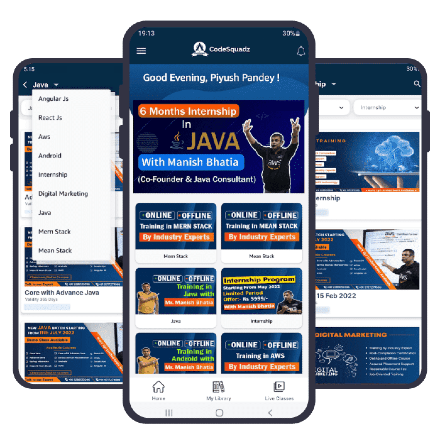


Looking to start your career as a Python developer. Our Python training near me program is designed for beginners and professionals who want to learn Python programming and gain practical skills. This course covers Python fundamentals, object-oriented programming, data structures, and project-based learning. With hands-on experience, students learn how to build Python applications and web solutions effectively. This training prepares learners to take on professional roles in software development.
Our program provides a complete learning path from basics to advanced Python development. You will learn Python libraries, frameworks, database management, and web development using Django and Flask. The Python training institute is designed to meet industry requirements, ensuring learners acquire practical skills that are highly sought after. Each module strengthens both conceptual knowledge and coding expertise.
Practical experience is crucial to becoming a professional Python developer. Our online Python training course emphasizes live projects and real-world applications so learners can apply concepts directly. You will gain exposure to software design, application workflows, and project management at our Python training center near me. This foundation helps you build advanced skills and prepares you for career opportunities. You can also explore Python full stack developer programs for additional learning paths in full stack development. This hands-on approach ensures you develop confidence in coding and problem-solving in Python.
Completing Python training institute near me opens opportunities in software development, web development, automation, and data analysis. Employers look for candidates with both technical knowledge and project experience. With practical experience and a solid portfolio, you can pursue roles such as Python developer, backend developer, or software engineer.
Start your journey to becoming a skilled Python developer with our industry-focused program. Our Python training in Noida offers practical projects, expert mentorship, and flexible learning schedules. Enhance your skills and take the first step toward a successful career in Python development today.
What is Python, Uses of Python Programming Language / Python? Applications, Python for Software development, Python for Networking, Python for Automated Testing, Features of Python Programming Language, Implementations of Python, and Python career opportunities?
Download your operating system compatible Python Interpreter, install Python, set environment variable, customize Python shell, write & execute Python programs using Interactive mode and script mode. Python PyCharm or IDE, set Python for PyCharm IDE, configure PyCharm IDE, write & execute Python programs.
Modes of Programming in Python, Interactive mode programming, Script mode programming, Creating Python program file, Python Identifiers, Python keywords, Lines and Indentation, Spilt Python statements, Join Python Statements, Writing code blocks, Comments in Python, and Quotation in Python.
Python keywords or reserved words, Python keywords define the syntax and structure of the Python language, Python keywords are case sensitive, Python literals (True, False, Null), Python Identifiers, class names, variable names, function names, method names, and Identifier naming rules.
Purpose/use of comments in Computer Programming, Comments for Understanding Python code, Python Comment Syntax, Python Single line comment, Multiline comment in Python, and writing Python comments.
What is Variable? Declaration of Variables, Assign Values to Variables, Initialization, Reading, Variable naming restrictions, and Types of Python Variables.
What is DataType? Implicit Declaration of Data Types, Python Numbers Integers, floating-point numbers, and complex numbers), Python Strings, Python boolean data type.
Python Arithmetic, Comparison/Relational Operators, Increment Operators, logical operators, Python Identity Operators, and Python Operators Precedence.
(Decision Making / Conditional Statements in Python, Simple If Structure, if else structure, if elif structure, and nested If Structure. Execute a block of Statements when the condition is true, Execute a block of Statements when a compound condition is true, Execute a block of Statements when the condition is true otherwise execute another block of Statements, Decide among several alternates(elif), and Execute a block of Statements when more than one condition is true (Nested if))
((Python Control Flow Statements, Python Loop Statements. Python while loop, Python for loop, Python range (), Python Nested Loop Structures, and Inserting conditions in Loops and vice versa.))
(Python Flow Control – Branching Statements, A branching statement is a statement that determines whether other statements will be executed. Python Branching Statements – break, continue, and pass)
(Python Number data types are for storing numeric values, Python supports integers, floats, and complex numbers.)
(String is a sequence of characters written in single quotes or in double quotes or in three double quotes. The string may have Alphabets, Numbers, and Special Characters. Operations on Strings, Finding String length, Concatenating Strings, Print a String multiple times, Check whether the String has all numeric characters?, and Check whether the String has all alphabetic characters?.)
((Python Data Structures, Create Python Lists, Update Python Lists, Delete Elements from Python Lists, and Built-in Functions & Built-in Methods for Python Lists.))
(Tuples are sequences, just like lists. The differences between tuples and lists are, the tuples cannot be changed unlike lists and tuples use parentheses, whereas lists use square brackets.)
(A Python set is a collection that is unordered and unindexed. In Python sets are written with curly brackets.)
(A dictionary is a collection that is unordered, changeable, and indexed. In Python dictionaries are written with curly brackets, and they have keys and values.)
(Array is a container that can hold a fixed number of items and these items should be of the same type. Python does not have built-in support for Arrays, but Python Lists can be used instead.)
(In all programming and scripting languages, a function is a block of program statements that can be used repetitively in a program. It saves the time of a developer. In Python concept of function is the same as in other languages. There are some built-in functions that are part of Python. Besides that, we can define functions according tour needs.)
(Python has several functions that are readily available for use. These functions are called built-in functions.)
A module allows you to logically organize your Python code. Simply, a module is a file consisting of Python code. A module can define functions, classes, and variables. A module can also include runnable code.
Python user input from the keyboard can be read using the input () built-in function. The input from the user is read as a string and can be assigned to a variable.
Python supports file handling and allows users to handle files i.e., to read and write files, along with many other file handling options, to cooperate on files.
Python provides us with a way to handle the Exception so that the other part of the code can be executed without any disruption. However, if we do not handle the exception, the interpreter doesn’t execute all the code that exists after that.
(A RegEx, or Regular Expression, is a sequence of characters that forms a search pattern. Python has a built-in package called re, which can be used to work with Regular Expressions. The re module offers a set of functions that allows us to search a string for a match. RegEx Functions, Meta characters, and Special Sequences.)
(Classes provide a means of bundling data and functionality together. Creating a new class creates a new type of object, allowing new instances of that type to be made. Objects are an encapsulation of variables and Functions in a single entity. Objects get their variables and functions from classes. Classes are essentially a template to create your objects.)
(A Python method is a label that you can call on an object; it is a piece of code executed on that object. Methods are simply another kind of function that reside in classes. You create and work with methods in Python in precisely the same way that you functions, except that methods are always associated with a class. You can create to winds of methods: those associated with the class itself and those associated with an instance of a class.)
(A constructor is a special type of method (function) that is used initialize the instance members of the class. Two types of Constructors in Python, Parameterized Constructor, Non-parameterized Constructor, Constructor Definition is executed when we create the object of this class.)
(Inheritance enables us to define a class that takes all the functionality from a parent class and allows us to add more. Inheritance is a powerful feature in object-oriented programming, Types Inheritance in Python, Single Inheritance, Multi-Level Inheritance, Multiple Inheritance, Hierarchical Inheritance, and Hybrid Inheritance.)
(Python Object Oriented Programming – Polymorphism, What is Polymorphism?, Types of Polymorphism in Python, Compile Time Polymorphism (Method Overloading), Run Time Polymorphism (Method Overriding), Polymorphism with class methods, and Polymorphism with Inheritance)
(What is Abstraction?, hiding the implementation details and only showing the essential features of the object, Abstraction in Python is achieved by using abstract classes and interfaces.)
(Encapsulation is one of the fundamental concepts in object-oriented programming (OOP). It describes the idea of wrapping data and the methods that work on data within one unit. Python is an interpreted programming language and implements weak encapsulation.)
(For database programming, Python supports many database serversMySQL, Oracle, PostgreSQL, SQLite, Sybase, Microsoft SQL Server, mSQL, Microsoft Access, and many more. It alssupports Data Query Statements, Data Definition Language (DDL), and Data Manipulation Language (DML). The standard database interface for Python is Python DB-API. In CodeSquadz MySql/MongoDb)
(What is a Thread in Computer Science? What is multithreading in Computer Science? Advantages of Multithreading, Disadvantages of Multithreading, and Python Multithreading Modules.)
(Python plays an essential role in network programming. The standard library of Python has full support for network protocols, encoding, and decoding of data and other networking concepts. What Are Sockets?)
(GUI Programming in Python, Python has a huge number of GUI frameworks (or toolkits) available for it, from TkInter (traditionally bundled with Python, using Tk) ta number of other cross-platform solutions, as well as bindings to platform-specific (also known as “native”) technologies.)

Take the next step in your career with the right choice. Explore our industry focused courses, learn practical skills, and get closer to your dream job with expert guidance and real projects.
Register NowJoin thousands of students who’ve launched successful careers with top employers.














Our students turned dreams into achievements! From first steps to big wins, their journeys inspire confidence, growth, and success. Hear how dedication and guidance made it all possible.

50 Hertz Limited
Hi, I am Ravi Prasad Panjiyar. I recently got placed at 50 Hertz Limited as a Software Developer. Grateful to Manish Bhatia sir at CodeSquadz for excellent training and guidance.

Idemia Syscom
It was a great journey from student to IT professional. My 6-month training under Manish sir helped me gain strong skills. His teaching made learning simple and effective. Thanks to CodeSquadz.

TCS
I had an amazing learning experience at CodeSquadz. I got placed at TCS with a good package. Thanks to Bhatia Sir and the team for their constant support and guidance.

Bitcomm Technologies
Hi, I am Saurav Kumar. I got placed at Bitcomm Technologies. At CodeSquadz, I learned JAVA concepts through practical training, which helped me build strong fundamentals.

Panorama Software Solution
Learning Software Testing at CodeSquadz really improved my skills. The hands-on training helped me secure my placement at Panorama Software Solution.

DSD Systems
The Data Science (AI/ML) course at CodeSquadz was really helpful. After learning here, I was able to confidently join DSD Systems.

Image Infosystem
Java practical training at CodeSquadz boosted my understanding. Thanks to the guidance and projects, I got placed at Image Infosystem.

Nascorp Technology
The Java Full Stack training at CodeSquadz really enhanced my skills. The hands-on projects helped me land a placement at Nascorp Technology.

The more you explore, the more you enhance your skills and head towards a successful IT career. Go and download our Android / Windows app and access our lessons to practice and interactive quizzes; this application provides an effective way to learn and sharpen your IT skills to advance your career.

.png)